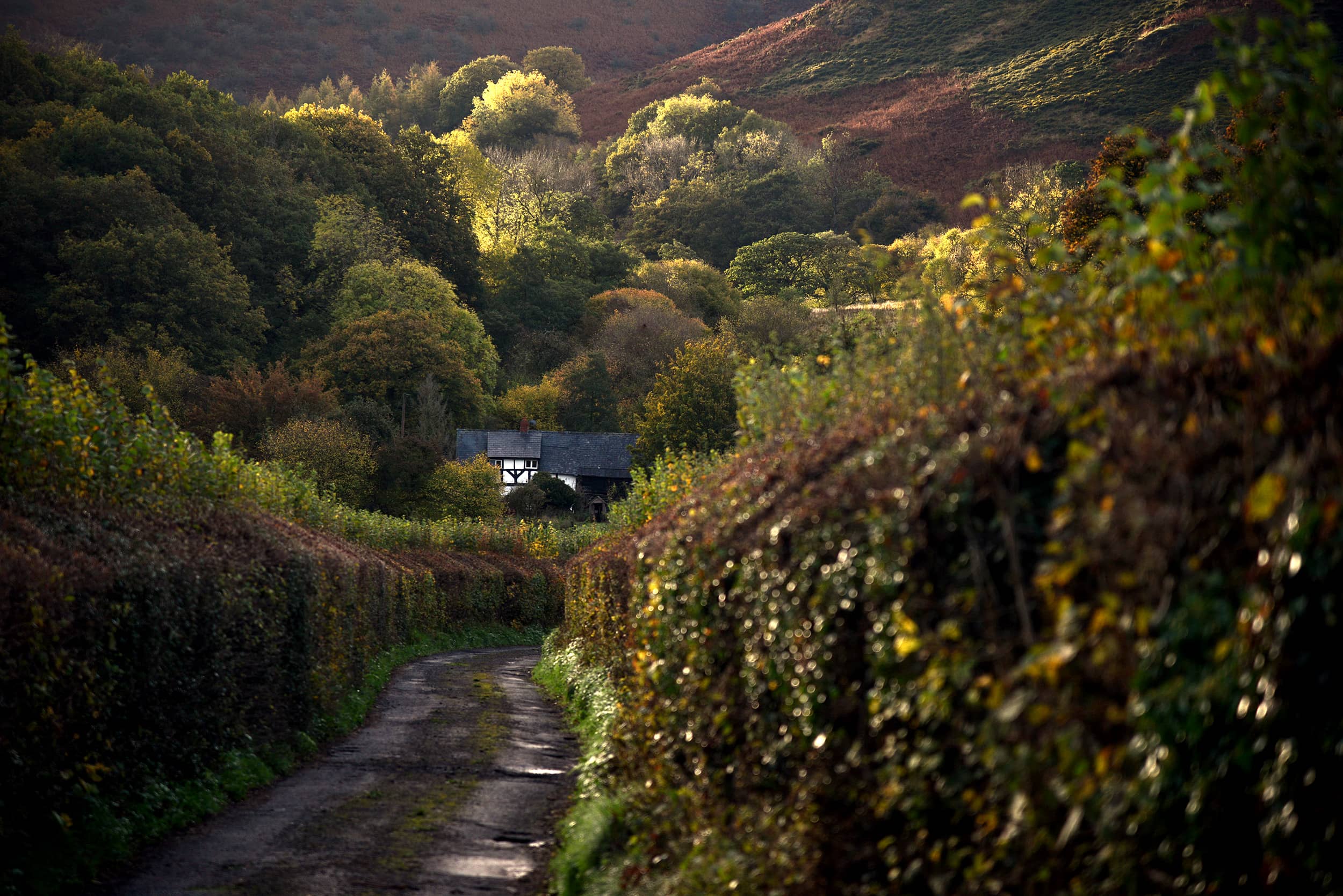
Now the leaves are golden I walk most days on the path around Worsell Wood, which, for me, is the most perfect square mile of landscape in this area – an area which, for me, is the most perfect landscape in Britain. The wood overlooks old Herefordshire to the east, wild Wales to the west. Brown cattle graze in the fields, roe deer timidly pick leaves from the grown-out hedges, a sheep dog barks in the distance. Hanter Hill and Hergest Ridge loom over the trees, more mountains than hills. It’s hard to put into words the sense of scale. The place towers.
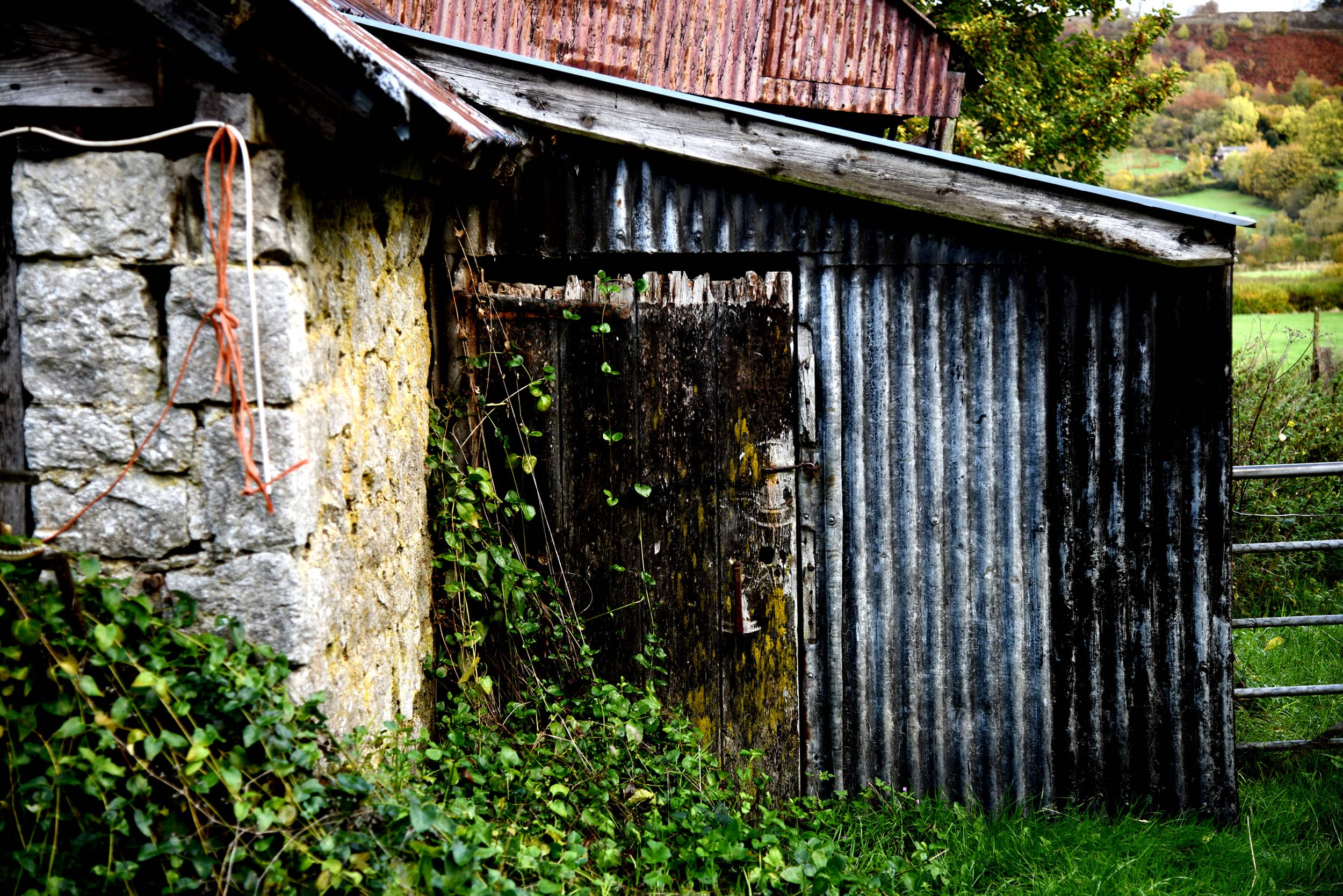
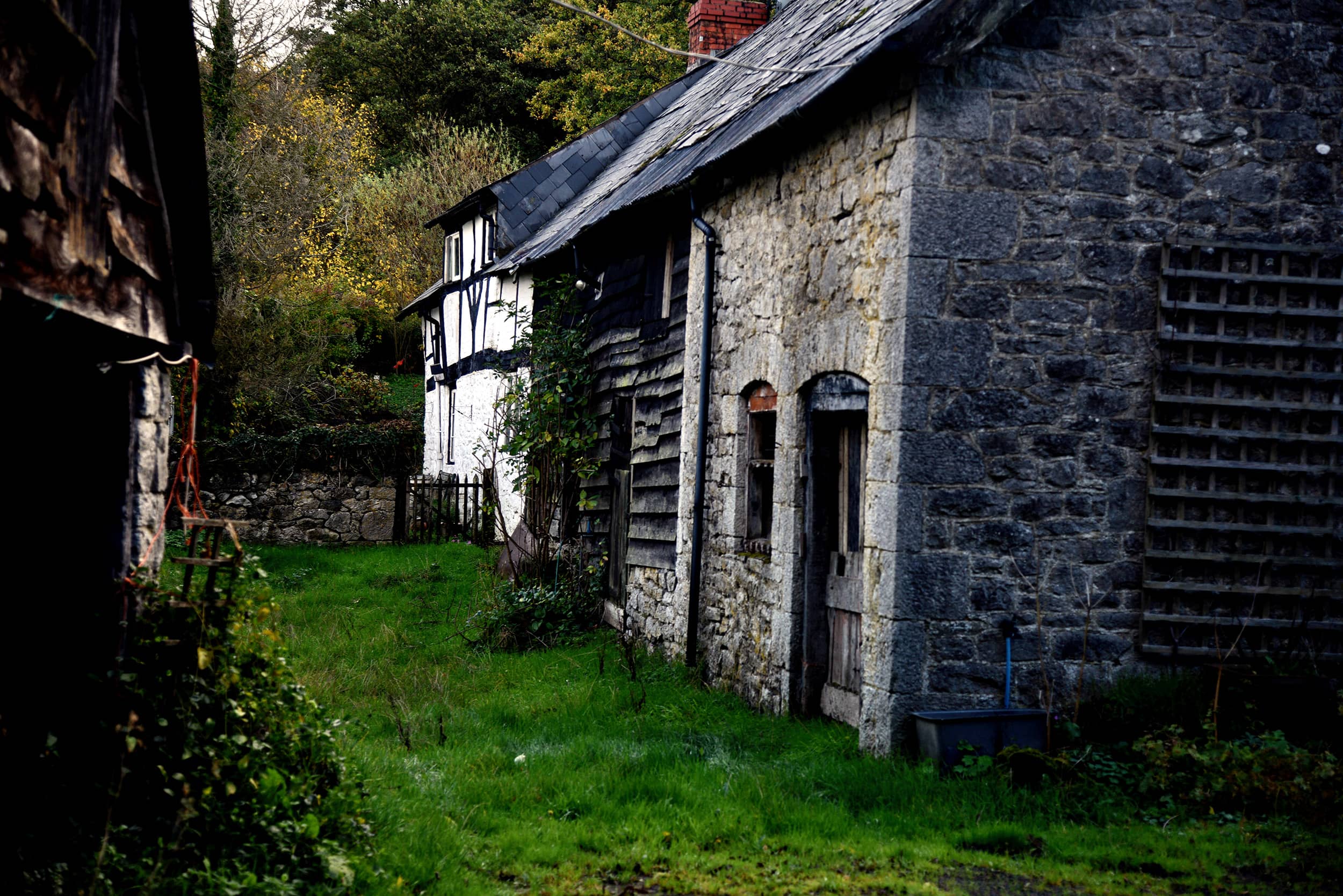
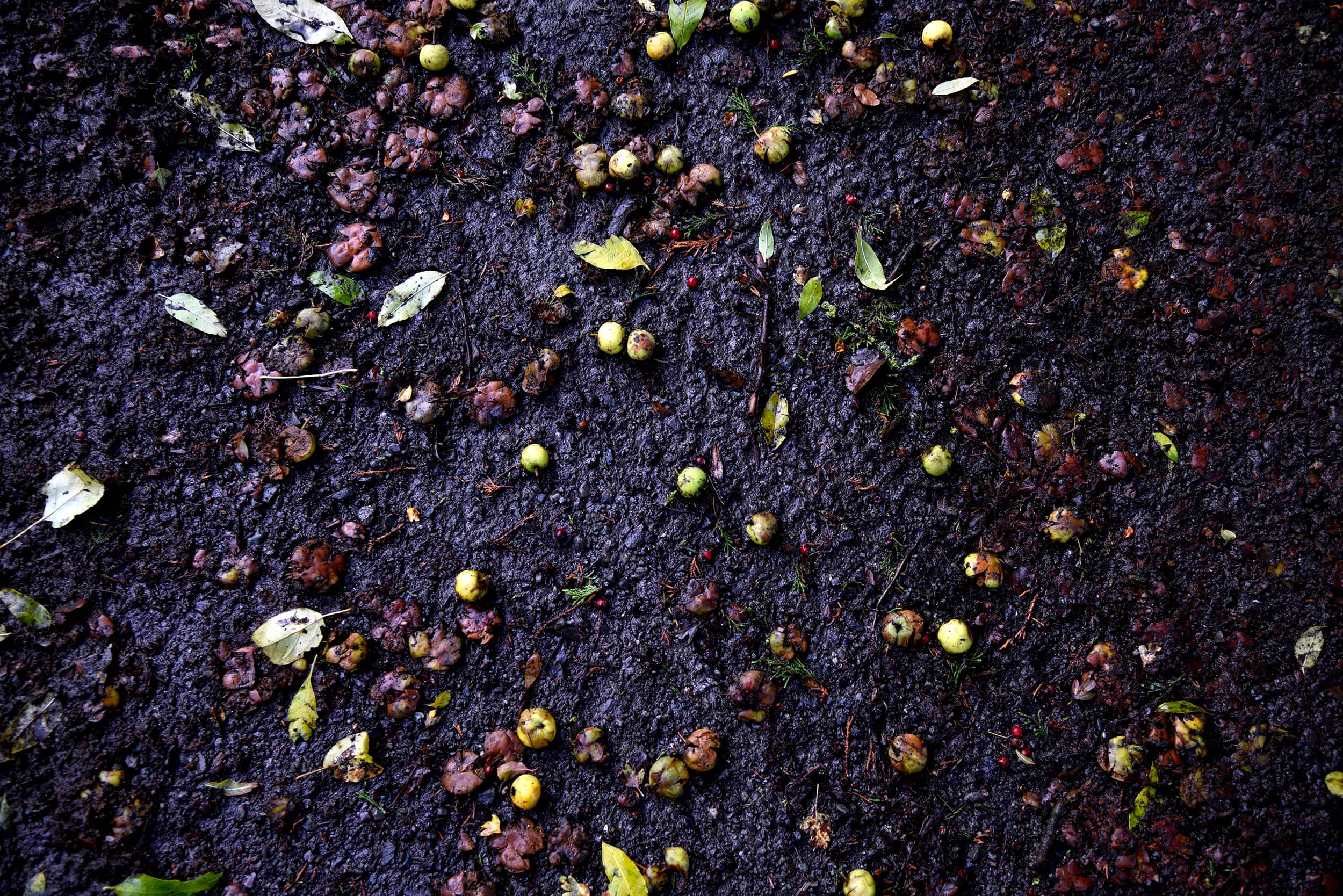
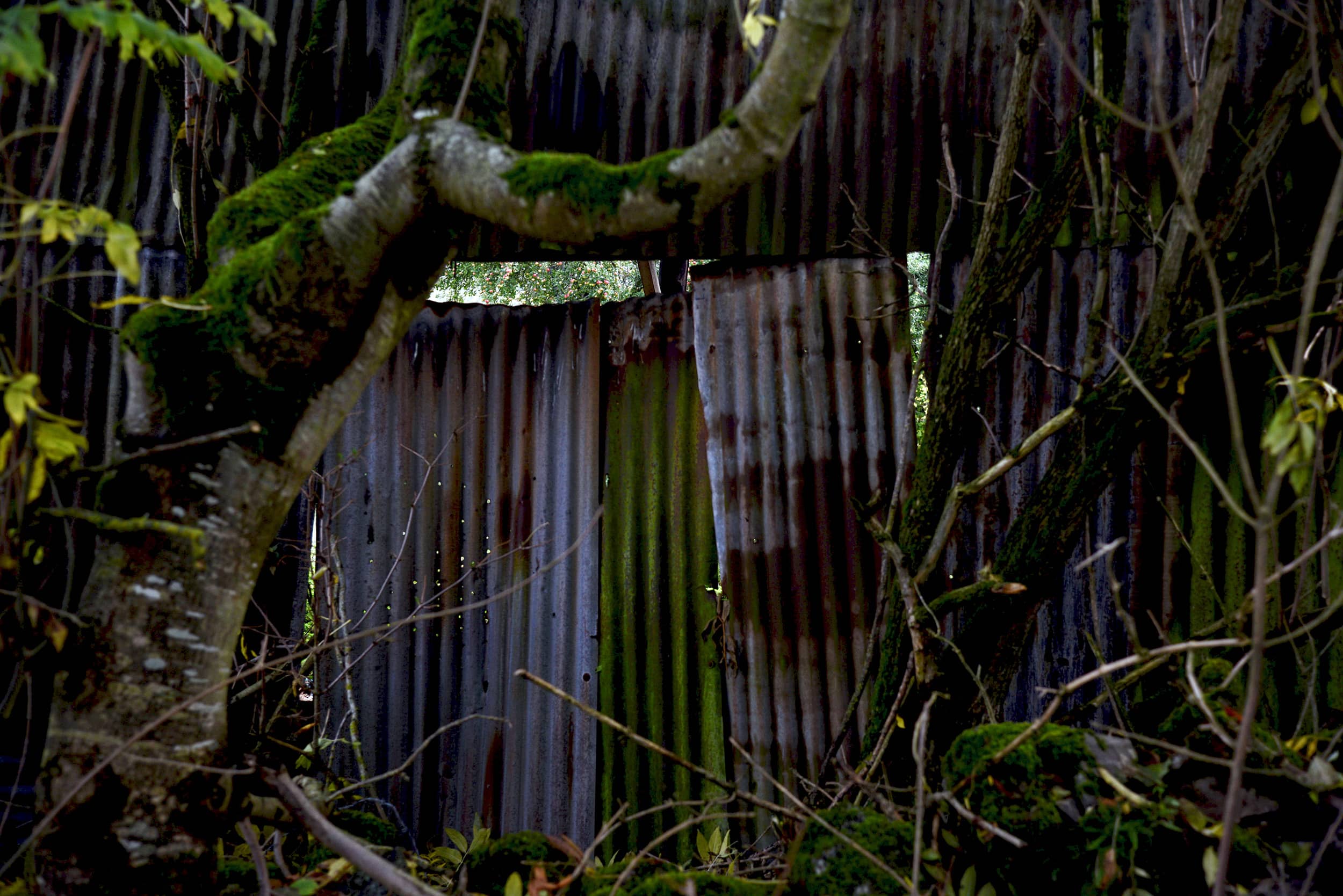
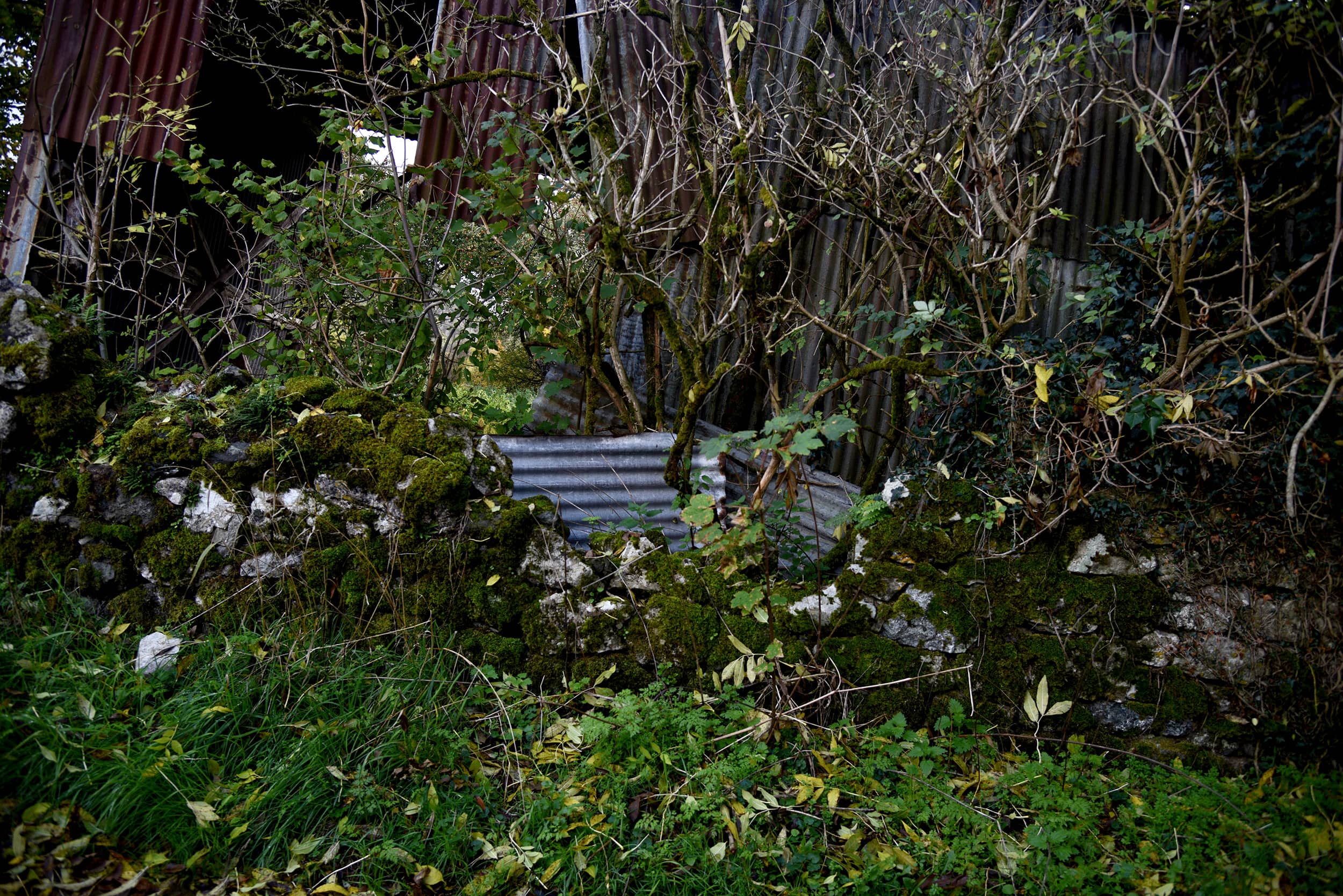
There’s a dog-leg path leading from the wood towards Radnor Hill and at the start of the path is a farmhouse which appears to be empty, perhaps abandoned. The house is part timber, part stone and, like many ancient farmhouses in the area, has a barn attached to one end. In Welsh it is known as a ‘tŷ hir’, or longhouse. These were designed to protect livestock in winter, to deter theft, to retain heat. Most of these houses have been converted now, their barns long gone, but this one seems to be untouched. The barn doors are nailed together from old and rotting planks, some painted, some not. A lean-to porch connecting to the back of the house is in demolishable condition, leaning in a way it shouldn’t. Through the dust-smeared windows you can see hanging sheets of mouldering cardboard, once used for roof insulation. The garden is overgrown, the orchard at the front has many apple trees weighed down with unpicked, blood red fruit. In a few weeks each one will be surrounded by a bright pool of rot.
In this part of the world, apples are our olives. Apples are superior to olives – more delicious and far more beautiful. The surfaces of apples hold more reds, golds and greens than a New England wood. And yet we have little reverence for them. We should probably build a new religion around them, or at least amend the old one (the bible never specified that the forbidden fruit was an apple).
I’ve been reading Karl Knausgaard’s, Winter, which is my kind of book, filled with short zoom-in/zoom-out essays holding quiet insights which only the best writers can conjure. It also contains the most beautiful illustrations I’ve seen in some time, by the artist Lars Lerin. In the book is an essay called Trains. Knausgaard thinks of trains as symbols of longing. “The train is going somewhere else, I’m not.” he writes.
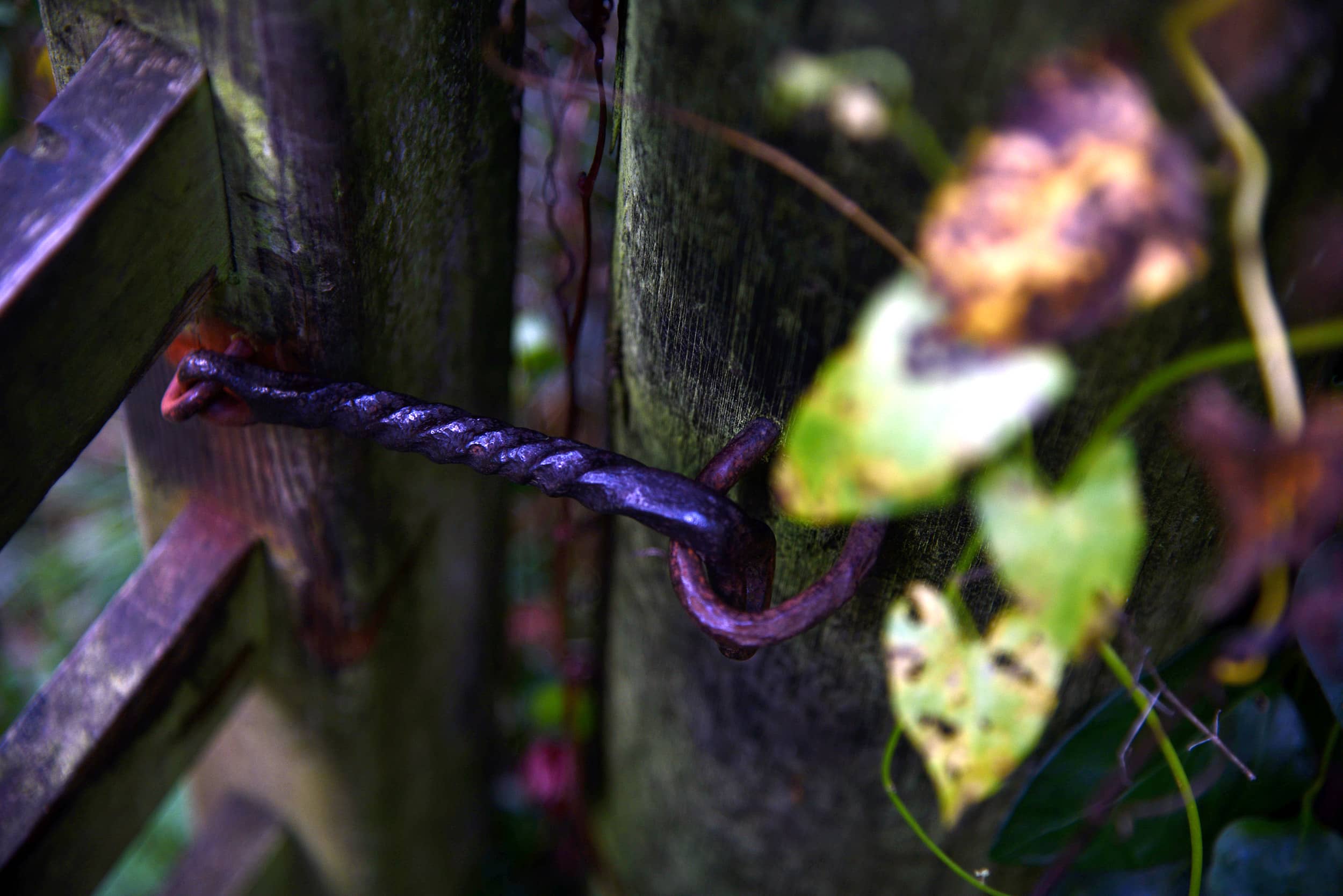
The latches on the footpath gates around Worsell Wood have all been hand forged. A simple design, with an eyelet at one end, and a right-angled hook and ring at the other, which drop into a semi-circular catch hammered into the wooden gate post. The blacksmith has worked a corkscrew design into each, as if they couldn’t resist making this simplest of things without creative embellishment. This is a philosophy I admire. Over the years the latches have been rusted by rain and polished by hands. They’re smooth and dark, coloured with soot and gold. Odd how some walkers can’t work out how to close them, as if these strange, hand-crafted devices serve as decoration only. Perhaps the latches are considered too beautiful for purpose – a little like the old house along the path which is undergoing an elegant disintegration.
Longing requires barriers – time-space barriers, or barriers of the imagination.
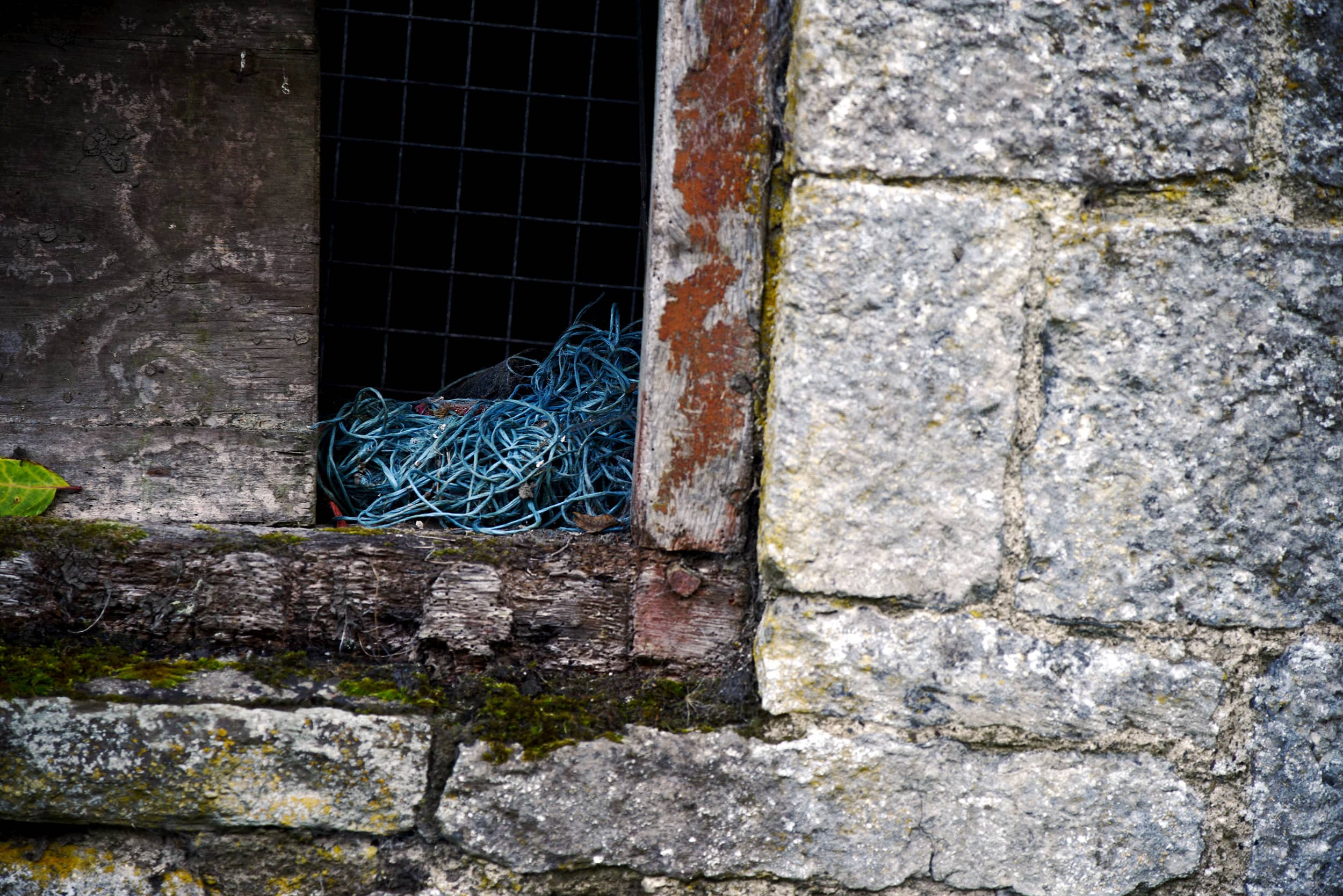
Actually the house may still have a purpose – it may even be inhabited. A few of the rooms may be watertight despite the holes in the roof. And there are discarded items here and there in the yard which could have been put there just hours ago. A new-looking camera tripod for instance, which sits on a bench in the workshop; or the rope swing which hangs from the oak tree next to the house, and has a bright turquoise rope without a spot of mildew. As I was taking photographs of the place, stealthily moving across the overgrown lawn, I heard a single, sharp cough as if the hermit inside was politely warning me off.
The verb and adjective “long” are both from the same root. The adjective is clear, descriptive, without ambiguity. We could discuss the length of long but we’d know what was meant. The verb, however, borders on the mystical. You’d think, given the scientism that dominates our society, that the word would have fallen out of use. Want is the preferred word now. Longing requires barriers – time-space barriers, or barriers of the imagination. Knausgaard’s longing is for an elsewhere, a somewhere he is not which he can’t quite describe. Perhaps longing “requires” that we can’t describe this longed for thing.
The Welsh word Hiraeth is used frequently here, even among the Welsh who don’t speak the native tongue. Most people translate it into English as a longing for home, but it’s one of those words which slips away from direct translation. It often contains loss or grief. It often contains land – often mountainous land. It’s a word which can be used by people who’ve never been to that land, an intergenerational longing, a longing for belonging.
The view through a train window is horizontal, like a strip of cinefilm. The view of the train itself is obviously horizontal. Trains point to places but only pass through them, they’re never really there. Is this what we long for now: to never connect? Freedom, it seems, is to lose attachments, obligations.
The view we creaturely humans were born with is a dome view, the circle around us, the hemisphere above us. The builders of the old house at the edge of Worsell Wood would have had this view their whole lives – their land and neighbours’ land, the enfolding hills. They resided at the hub while life and the seasons circled around them.
Can houses long? Perhaps a longhouse can. Can it long to be inhabited again, for a family to tend to it, to the land around it? Can it long for the apples in the orchard to be picked, peeled, sliced, baked – for the scent of them to be absorbed into its walls? For some craftsperson in the barn to be working things by hand in the dim light, making gatelatches perhaps, one at a time, each slightly different to the next. Probably not. But there’s still a longing in some of us which – though we can’t quite imagine it and though we can never quite reach it – looks like that.